
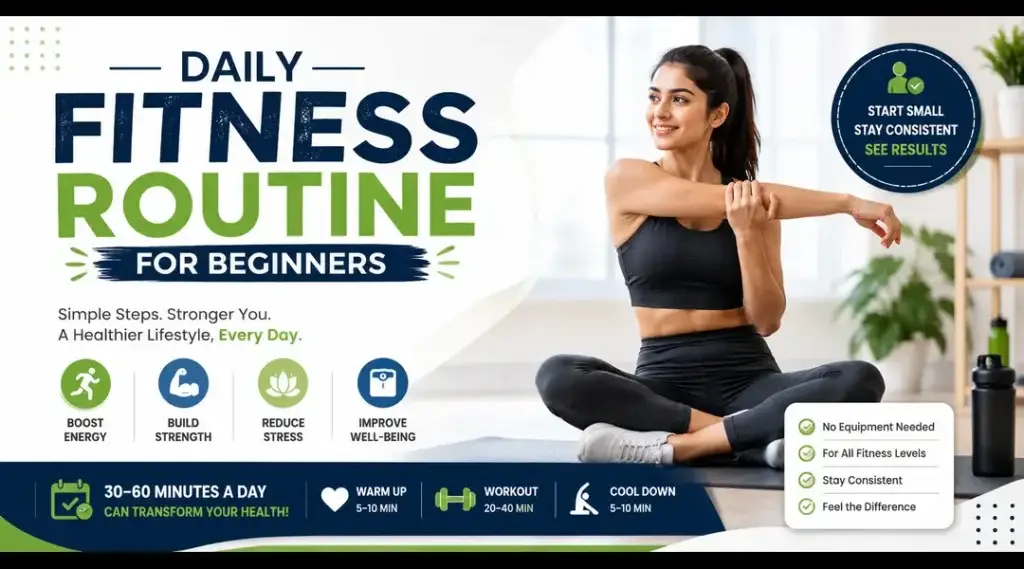
Starting a healthier lifestyle does not require expensive gym memberships, advanced equipment, or hours of exercise every day. The most important step is building a consistent habit that fits your lifestyle. A well planned Daily Fitness Routine for Beginners helps improve strength, increase energy, support heart health, and boost confidence without overwhelming your body.
Many beginners quit because they try to do too much too soon. Instead of following intense workout plans, focus on small, achievable goals that gradually become part of your daily routine. Consistency always beats perfection.
In this guide, you will learn how to create a beginner friendly fitness routine, what exercises to include, healthy eating habits, recovery tips, and common mistakes to avoid. By following these practical steps, you can build a sustainable fitness lifestyle that delivers long term results.
Why Every Beginner Needs a Daily Fitness Routine
A structured routine helps your body adapt to physical activity while reducing the risk of injury. It also creates discipline, making it easier to stay motivated even on busy days.
Some of the biggest benefits include:
- Improves cardiovascular health
- Builds muscle strength gradually
- Increases flexibility and mobility
- Supports healthy weight management
- Boosts energy levels
- Improves sleep quality
- Reduces daily stress
- Enhances confidence and self esteem
Exercise is not only about appearance. It contributes to overall wellness by improving both physical and emotional health. Many people also combine fitness with Mental Health Tips to develop a healthier and more balanced lifestyle.
How to Prepare Before Starting
Preparation makes your fitness journey smoother and more enjoyable.
Wear Comfortable Clothing
Choose breathable clothes and supportive athletic shoes to reduce discomfort and prevent injuries.
Stay Hydrated
Drink water before, during, and after your workout to maintain proper hydration.
Warm Up First
Spend five to ten minutes warming up your muscles with light movements such as:
- Walking
- Arm circles
- Shoulder rolls
- Hip rotations
- Leg swings
A proper warm up increases blood circulation and prepares your body for exercise.
Daily Fitness Routine for Beginners
This routine is designed for people with little or no fitness experience. It takes around 30 to 40 minutes and can be adjusted according to your fitness level.
Morning Warm Up
Begin with five to ten minutes of light activity.
Examples include:
- Brisk walking
- Marching in place
- Gentle stretching
- Neck rotations
- Shoulder circles
The goal is to wake up your muscles and improve mobility.
Cardio Exercise
Spend fifteen to twenty minutes doing moderate intensity cardio.
Good beginner options include:
- Fast walking
- Cycling
- Dancing
- Jump rope at a slow pace
- Low impact aerobics
Cardio strengthens your heart, burns calories, and improves endurance.
Strength Training
Perform two sets of each exercise.
Bodyweight Squats
- 10 to 12 repetitions
Strengthens your legs and core.
Wall Push Ups
- 10 repetitions
Builds upper body strength while reducing pressure on the joints.
Glute Bridges
- 12 repetitions
Improves hip stability and strengthens your lower body.
Bird Dog
- 10 repetitions on each side
Enhances balance and core stability.
Standing Calf Raises
- 15 repetitions
Strengthens calves and improves ankle stability.
Cool Down
Finish your workout with gentle stretches for five to ten minutes.
Focus on:
- Hamstrings
- Quadriceps
- Calves
- Chest
- Back
- Shoulders
Cooling down helps reduce muscle tightness and improves flexibility.
Weekly Beginner Workout Schedule
A simple weekly schedule prevents overtraining while allowing your body to recover.
| Day | Activity |
| Monday | Full body workout and walking |
| Tuesday | Cardio and stretching |
| Wednesday | Strength training |
| Thursday | Light yoga and walking |
| Friday | Full body workout |
| Saturday | Outdoor activity or cycling |
| Sunday | Active recovery and stretching |
Remember that rest days are just as important as workout days.
Best Foods to Support Your Fitness Routine
Exercise works best when combined with healthy eating habits.
Protein Rich Foods
Protein supports muscle recovery and growth.
Good sources include:
- Eggs
- Chicken
- Fish
- Greek yogurt
- Lentils
- Beans
- Tofu
Healthy Carbohydrates
Carbohydrates provide energy during workouts.
Choose:
- Brown rice
- Oats
- Sweet potatoes
- Whole grain bread
- Fruits
Healthy Fats
Healthy fats support overall body function.
Include:
- Nuts
- Seeds
- Avocados
- Olive oil
Fruits and Vegetables
Colorful vegetables and fruits provide vitamins, minerals, and antioxidants that help recovery.
Aim to fill half your plate with vegetables whenever possible.
Importance of Rest and Recovery
Many beginners think exercising every day without rest leads to faster results. In reality, your muscles grow stronger during recovery.
Recovery helps:
- Repair muscles
- Reduce soreness
- Prevent injuries
- Improve performance
- Maintain energy levels
Try to sleep seven to nine hours every night to support recovery and overall health.
Beginner Fitness Tips for Better Results
Small daily habits often create the biggest improvements over time.
Start Slowly
Do not push yourself too hard during the first few weeks.
Focus on Consistency
A twenty minute workout every day is better than one exhausting workout once a week.
Track Your Progress
Keep a journal or use a fitness app to record:
- Workout duration
- Exercises completed
- Body measurements
- Energy levels
- Personal achievements
Tracking progress helps maintain motivation.
Set Realistic Goals
Examples include:
- Walk for thirty minutes daily
- Complete three workouts each week
- Drink more water
- Improve flexibility
Achievable goals create long term success.
Common Beginner Mistakes to Avoid
Learning what not to do is just as important as knowing what to do.
Skipping Warm Ups
Cold muscles are more likely to become injured.
Poor Exercise Form
Correct technique prevents injuries and improves results.
If needed, practice movements slowly before increasing repetitions.
Doing Too Much Too Soon
Avoid exercising intensely every day during your first few weeks.
Gradually increase workout intensity over time.
Ignoring Nutrition
Exercise alone cannot compensate for poor eating habits.
A balanced diet supports better performance and recovery.
Comparing Yourself to Others
Everyone progresses at a different pace.
Focus on becoming stronger than you were yesterday.
How to Stay Motivated
Motivation naturally changes over time, so creating habits is more effective than relying on inspiration.
Some simple ways to stay consistent include:
- Exercise at the same time each day
- Prepare workout clothes in advance
- Listen to motivating music
- Celebrate small achievements
- Find a workout partner
- Try different activities to avoid boredom
Building a routine makes fitness feel like a normal part of daily life rather than a temporary challenge.
Fitness and Mental Well Being
Regular exercise positively affects both the body and the mind. Physical activity helps release natural chemicals that improve mood and reduce stress.
Combining exercise with practical Mental Health Tips such as mindfulness, quality sleep, stress management, and maintaining social connections can create a healthier lifestyle overall.
When physical fitness and emotional wellness work together, it becomes easier to stay motivated and maintain healthy habits for years.
Conclusion
Following a Daily Fitness Routine for Beginners is one of the best investments you can make in your health. You do not need complicated workout plans or expensive equipment to achieve meaningful results. By focusing on regular movement, balanced nutrition, proper recovery, and realistic goals, you can build a sustainable fitness habit that lasts for years.
Remember that progress takes time. Every workout, healthy meal, and positive choice moves you closer to a stronger and healthier version of yourself. Stay patient, remain consistent, and enjoy the journey toward better fitness and overall well being.
Frequently Asked Questions
How long should beginners exercise every day?
Most beginners benefit from twenty to forty minutes of moderate exercise each day. Focus on consistency instead of long workout sessions.
Can I lose weight with a beginner fitness routine?
Yes. A consistent workout routine combined with balanced nutrition and proper sleep can support healthy weight loss over time.
Do I need gym equipment?
No. Many effective beginner exercises use only your body weight, making it easy to exercise at home.
How many rest days should beginners take?
One or two recovery days each week are usually enough for most beginners. Light walking or stretching can still be done on recovery days.
When will I start seeing results?
Many people notice improved energy and mood within two to four weeks. Visible physical changes often appear after six to twelve weeks with consistent effort and healthy eating.