The job market is changing faster than ever. Technology, artificial intelligence, automation, and digital transformation are reshaping industries across the world. Many careers that exist today will evolve, while entirely new job roles will continue to emerge.
For students, this means that earning a degree alone is no longer enough. Employers now look for people who can learn quickly, solve problems, communicate effectively, and adapt to new technologies.
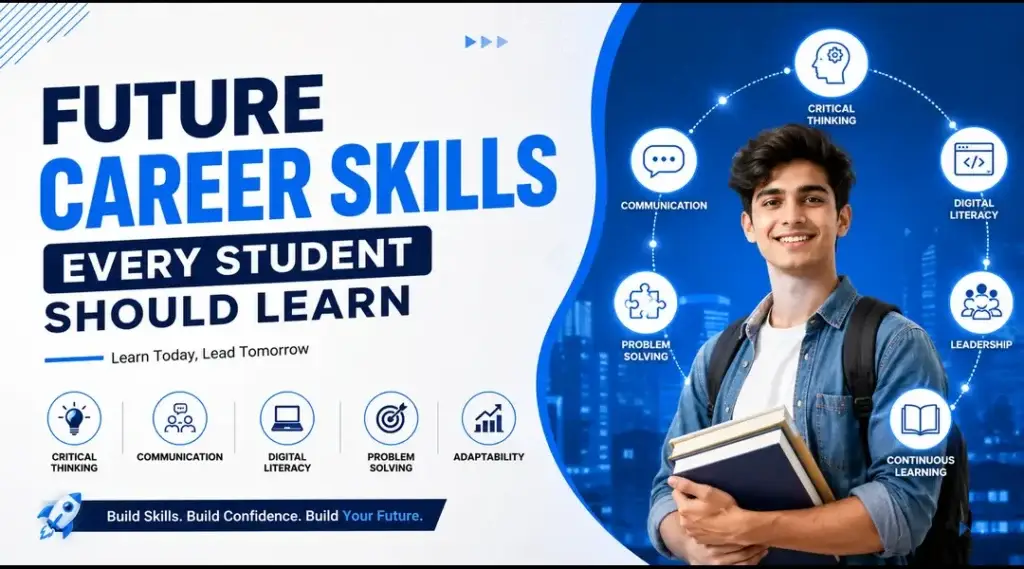
Developing the right Future Career Skills can help students stay competitive, improve employability, and prepare for long term career success. Whether you want to become a software developer, marketer, designer, entrepreneur, healthcare professional, or business leader, these skills will remain valuable across almost every industry.
In this guide, we will explore the most important career skills every student should start learning today and practical ways to build them.
Why Future Career Skills Matter
The workplace is becoming more technology focused every year. Companies now value employees who combine technical knowledge with strong human skills.
Learning modern career skills helps students:
- Stay competitive in the job market
- Adapt to changing industries
- Improve confidence and productivity
- Increase internship and job opportunities
- Prepare for remote and hybrid work
- Build long term career growth
Students who continuously upgrade their knowledge are more likely to succeed in both traditional and emerging careers.
Communication Skills
Communication remains one of the most valuable professional skills.
Being able to explain ideas clearly helps students perform better during interviews, presentations, meetings, and teamwork.
Strong communication includes:
Verbal Communication
Speak confidently and express ideas clearly.
Written Communication
Write professional emails, reports, assignments, and messages with proper grammar.
Listening Skills
Understanding others carefully improves teamwork and reduces misunderstandings.
Students can improve communication by reading regularly, practicing presentations, joining discussions, and writing consistently.
Critical Thinking and Problem Solving
Employers want people who can solve challenges instead of simply following instructions.
Critical thinking means analyzing information before making decisions.
Problem solving involves:
Identifying the real issue
Understand what is causing the problem.
Evaluating possible solutions
Compare different approaches before choosing one.
Making informed decisions
Use logic, research, and evidence instead of assumptions.
These abilities are valuable in engineering, business, healthcare, education, marketing, and almost every profession.
Digital Literacy
Every student should understand how digital tools work.
Digital literacy goes beyond using a smartphone. It includes working efficiently with software, online collaboration platforms, cloud storage, spreadsheets, presentations, and productivity tools.
Important digital skills include:
- Microsoft Office
- Google Workspace
- Cloud storage
- Online collaboration tools
- Video conferencing platforms
- Digital research techniques
Students who become comfortable with digital technology adapt more easily to modern workplaces.
Artificial Intelligence Literacy
Artificial intelligence is becoming part of everyday work.
Students do not need to become AI experts, but they should understand how AI tools improve productivity and support decision making.
Useful AI related skills include:
- Writing effective prompts
- Using AI responsibly
- Fact checking AI generated content
- Understanding AI limitations
- Improving workflow with AI tools
Learning AI today will help students remain competitive in tomorrow’s workforce.
Adaptability and Continuous Learning
Technology changes rapidly.
The most successful professionals are lifelong learners who continue improving their knowledge throughout their careers.
Students should develop habits like:
- Reading industry blogs
- Watching educational videos
- Attending webinars
- Taking online certifications
- Exploring Best Free Courses to gain practical knowledge
- Building new technical and professional abilities
Continuous learning ensures your skills remain relevant even as industries evolve.
Emotional Intelligence
Technical knowledge is important, but emotional intelligence is equally valuable.
It helps students build strong relationships and work effectively with others.
Emotional intelligence includes:
Self Awareness
Understand your strengths, weaknesses, and emotions.
Empathy
Respect different perspectives and understand how others feel.
Relationship Management
Handle disagreements professionally and build trust with teammates.
Strong emotional intelligence creates better leaders and stronger teams.
Teamwork and Collaboration
Modern workplaces rely on collaboration.
Students who work well with others often perform better during internships, university projects, and full time jobs.
Effective teamwork requires:
- Respecting different opinions
- Sharing responsibilities
- Supporting teammates
- Solving conflicts professionally
- Working toward shared goals
Many employers value collaboration just as much as technical expertise.
Time Management
Managing time effectively helps students balance academics, internships, personal projects, and career preparation.
Good time management includes:
Setting priorities
Focus on important tasks first.
Planning daily work
Create schedules and realistic deadlines.
Avoiding procrastination
Break large projects into smaller tasks.
Students who manage time effectively experience less stress and better productivity.
Creativity and Innovation
Automation can replace repetitive tasks, but creativity remains uniquely human.
Creative thinking allows students to:
- Generate fresh ideas
- Improve existing processes
- Solve complex problems
- Design innovative products
- Develop successful business strategies
Creativity is valuable across technology, education, business, media, healthcare, and entrepreneurship.
Leadership Skills
Leadership is not limited to managers.
Students can develop leadership through college activities, volunteer work, internships, and group projects.
Leadership includes:
- Decision making
- Responsibility
- Accountability
- Motivation
- Delegation
- Conflict resolution
Strong leaders inspire others while helping teams achieve common goals.
Financial Literacy
Understanding money management prepares students for independent life.
Financial literacy includes:
- Budgeting
- Saving
- Investing basics
- Understanding taxes
- Responsible borrowing
- Managing expenses
Students who understand personal finance make smarter financial decisions throughout their careers.
Data Analysis Skills
Data plays a major role in business decisions.
Students should learn how to interpret information and make decisions based on facts.
Basic analytical skills include:
- Reading charts
- Understanding spreadsheets
- Creating reports
- Identifying trends
- Making data driven decisions
Even non technical careers increasingly require basic data analysis knowledge.
Networking Skills
Building professional relationships creates future career opportunities.
Students can network by:
- Attending seminars
- Joining student organizations
- Connecting with professionals online
- Participating in internships
- Engaging in industry events
Professional networking often leads to internships, mentorships, collaborations, and job offers.
Personal Branding
Your online presence influences career opportunities.
Employers frequently review online profiles before hiring candidates.
Students should:
- Create a professional resume
- Build a strong LinkedIn profile
- Share meaningful projects
- Maintain a positive online reputation
- Showcase certifications and achievements
A strong personal brand increases visibility and credibility.
Technical Skills Relevant to Your Career
Every field has specialized technical skills.
Examples include:
Computer Science
- Programming
- Cybersecurity
- Cloud computing
- Software development
Business
- Excel
- Business analytics
- Digital marketing
- Project management
Design
- Graphic design
- UI design
- Video editing
- Creative software
Healthcare
- Medical software
- Electronic health records
- Patient management systems
Choose technical skills based on your career goals while continuing to improve your general professional abilities.
Learning Skills Help Students Grow Faster
One of the biggest advantages students can develop is strong Learning Skills.
Instead of memorizing information, focus on understanding concepts and applying knowledge in real situations.
Effective learning strategies include:
- Active recall
- Spaced repetition
- Note taking
- Practical projects
- Regular revision
- Seeking constructive feedback
Students who learn efficiently adapt faster to new technologies and changing job requirements.
How to Start Building Future Career Skills
Developing career skills does not require expensive training.
Start with these practical steps:
- Identify the skills most relevant to your desired career.
- Create a weekly learning schedule.
- Practice through real projects.
- Complete online certifications.
- Read books and industry articles regularly.
- Explore Best Free Courses to strengthen practical knowledge without increasing expenses.
- Build a portfolio showcasing your work.
- Seek feedback from mentors and teachers.
- Stay updated with industry trends.
- Continue learning throughout your professional journey.
Consistency matters more than learning everything at once.
Common Mistakes Students Should Avoid
Many students delay career preparation until graduation.
Avoid these common mistakes:
- Ignoring soft skills
- Depending only on classroom education
- Avoiding internships
- Not building a portfolio
- Neglecting communication skills
- Failing to learn new technology
- Waiting too long to start networking
- Not updating knowledge regularly
Starting early gives students a significant advantage.
The Future Belongs to Lifelong Learners
The future workplace will continue evolving as technology advances.
Students who embrace learning, improve communication, adapt quickly, and build strong technical and professional abilities will remain valuable regardless of industry changes.
The goal is not simply finding a job but building a career that continues growing over time.
By investing in Future Career Skills today, students create opportunities for better employment, higher salaries, stronger professional confidence, and long term success.
Conclusion
Success in the modern world depends on more than academic qualifications. Employers increasingly seek individuals who combine technical expertise with communication, adaptability, critical thinking, leadership, and continuous learning.
Start improving one skill at a time, practice consistently, and apply what you learn through real projects and experiences. Small improvements made today can create significant career opportunities tomorrow.
The sooner students begin developing these essential skills, the better prepared they will be for the challenges and opportunities of the future.