The job market is changing faster than ever. Artificial intelligence, automation, remote work, cybersecurity, digital platforms, and data-driven decision-making are transforming the way companies operate. Because of this, learning the right skills can make a major difference in your career growth and long-term employability.
Whether you are a student, working professional, freelancer, entrepreneur, or someone planning a career change, focusing on valuable skills can help you stay competitive.
The good news is that you do not need to learn everything at once. The smarter approach is to identify skills that are useful across industries and build practical experience over time.
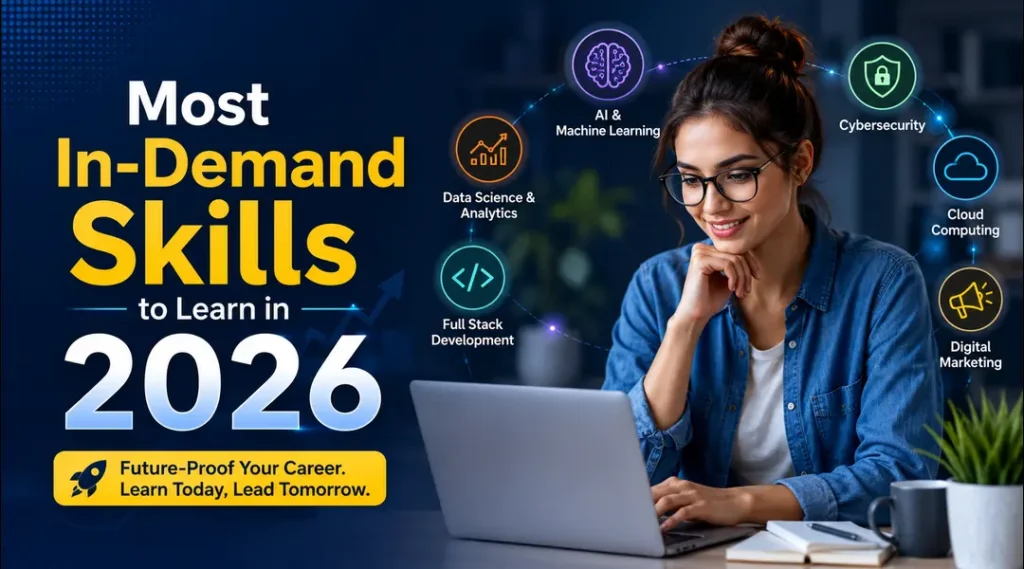
In this guide, we explore the Most In-Demand Skills to learn in 2026 and explain why they matter, who can benefit from them, and how you can start developing them.
Why Skills Matter More Than Ever in 2026
Traditional qualifications are still valuable, but employers increasingly look at what candidates can actually do. Practical knowledge, problem-solving ability, digital skills, and communication can influence hiring and career progression.
Technology is also changing job responsibilities. Some repetitive tasks can now be automated, while new opportunities are emerging around artificial intelligence, data, digital products, security, and technology management.
This makes continuous learning an important part of career development.
Instead of asking, “Which job will never change?” it can be more useful to ask, “Which skills will help me adapt when the job changes?”
1. Artificial Intelligence and AI Literacy
Artificial intelligence is one of the biggest areas of opportunity in 2026. You do not necessarily need to become an AI engineer to benefit from it.
AI literacy means understanding how AI tools work, where they can be useful, how to write effective instructions, and how to evaluate AI-generated information.
Professionals in marketing, education, customer service, finance, design, operations, and many other fields can use AI to improve productivity.
What to Learn
Start with:
- AI fundamentals
- Prompt writing and prompt optimization
- AI-assisted research
- AI productivity tools
- Responsible AI use
- Fact-checking AI outputs
- Basic automation
The most valuable approach is to combine AI knowledge with another professional skill. For example, AI plus marketing can help with content research, while AI plus data analysis can improve reporting and decision-making.
2. Data Analysis
Businesses generate enormous amounts of information, but data is only useful when people can understand it and turn it into practical decisions.
Data analysis remains an important career skill because organizations need professionals who can identify patterns, measure performance, and communicate insights clearly.
You do not have to become a data scientist to get started.
What to Learn
Useful skills include:
- Excel or Google Sheets
- SQL
- Data visualization
- Basic statistics
- Dashboard creation
- Data cleaning
- Business reporting
As you progress, you can explore tools such as Power BI, Tableau, Python, or other analytics platforms.
The key is not simply learning software. Learn how to answer real business questions with data.
3. Cybersecurity
As businesses move more operations online, protecting information and digital systems becomes increasingly important.
Cybersecurity is no longer only a concern for large technology companies. Small businesses, schools, healthcare organizations, financial institutions, and online businesses all need better security practices.
What to Learn
Beginners can start with:
- Cybersecurity fundamentals
- Password and account security
- Network basics
- Cloud security concepts
- Risk management
- Security awareness
- Common online threats
People who enjoy technology and problem-solving can later explore areas such as ethical hacking, security analysis, incident response, or cloud security.
4. Digital Marketing
Digital marketing continues to be a valuable skill because businesses need ways to attract customers, build trust, and generate sales online.
The field is broader than social media posting. Modern digital marketing can include search engine optimization, content strategy, email marketing, analytics, paid advertising, conversion optimization, and audience research.
What to Learn
Consider developing skills in:
- SEO
- Content marketing
- Email marketing
- Social media marketing
- Search intent research
- Analytics
- Conversion rate optimization
- Marketing automation
One important advantage of digital marketing is that you can build practical experience through your own website, portfolio, or small projects.
5. Communication and Interpersonal Skills
Technology skills can open doors, but communication often determines how effectively you work with other people.
Clear writing, active listening, presentation skills, teamwork, negotiation, and emotional intelligence are valuable in almost every industry.
Even highly technical professionals need to explain complex ideas to managers, customers, teammates, or clients.
How to Improve Communication
You can practice by:
- Writing clearly and concisely
- Giving short presentations
- Asking better questions
- Listening without interrupting
- Learning to explain technical topics simply
- Requesting constructive feedback
These skills are especially valuable for people moving into leadership or client-facing roles.
6. Cloud Computing
Cloud technology has become a fundamental part of modern business infrastructure. Organizations use cloud platforms for storage, software, databases, applications, computing resources, and collaboration.
Learning cloud concepts can therefore be useful for IT professionals and people entering technology careers.
What to Learn
Start with basic concepts such as:
- Cloud computing fundamentals
- Virtual machines
- Cloud storage
- Databases
- Networking
- Identity and access management
- Cloud security
After learning the basics, you can explore major cloud platforms and work toward practical projects or certifications.
7. Software Development and Coding
Coding remains one of the most useful technical skills, even as AI-assisted development becomes more common.
AI tools can help developers write and review code, but understanding programming logic is still important. People need to know how to define problems, test solutions, identify errors, and maintain applications.
Beginner-Friendly Areas
Depending on your goals, you could explore:
- HTML and CSS
- JavaScript
- Python
- SQL
- APIs
- Git and version control
- Web development
The best way to learn programming is through projects. Building a small website, automation tool, dashboard, or simple application can teach more than passively watching tutorials.
8. Project Management
Companies need people who can turn ideas into completed projects.
Project management combines planning, communication, organization, risk management, resource allocation, and problem-solving. These abilities are useful in technology, marketing, construction, healthcare, finance, education, and many other sectors.
Important Project Management Skills
Learn how to:
- Define project goals
- Create realistic timelines
- Manage priorities
- Track tasks
- Identify risks
- Communicate with stakeholders
- Measure project results
Familiarity with project management platforms can also help you work effectively with distributed teams.
9. Adaptability and Critical Thinking
One of the most important skills for the modern workplace is the ability to learn and adapt.
Technology can change tools and processes quickly. Instead of relying only on knowledge you learned several years ago, developing a habit of continuous learning can help you respond to new challenges.
Critical thinking is equally important.
It involves evaluating information, questioning assumptions, comparing evidence, recognizing potential problems, and making reasoned decisions.
How to Build These Skills
Try regularly:
- Learning something outside your current role
- Comparing multiple sources before accepting information
- Solving real-world problems
- Reviewing your decisions
- Learning from mistakes
- Experimenting with new tools
These skills can strengthen almost every other skill on this list.
10. Financial and Business Literacy
Understanding basic business and financial concepts can make professionals more effective, even when finance is not their primary career.
Financial literacy can help you understand budgets, revenue, costs, pricing, profitability, and business performance.
Useful Topics to Learn
Start with:
- Budgeting
- Basic accounting
- Profit and loss
- Cash flow
- Business models
- Pricing
- Financial decision-making
Entrepreneurs, freelancers, managers, and employees can all benefit from understanding how their work contributes to business results.
11. Content Creation and Personal Branding
The internet has created more opportunities for professionals to demonstrate their knowledge publicly.
Content creation can include blogging, video, newsletters, podcasts, educational resources, social media, or professional portfolios.
A strong personal brand is not simply about becoming famous. It is about clearly communicating what you know and what problems you can solve.
Skills Worth Developing
Focus on:
- Writing
- Video production
- Storytelling
- Basic design
- SEO
- Audience research
- Social media strategy
- Personal branding
A portfolio of useful work can sometimes communicate your abilities more effectively than a list of qualifications alone.
How to Choose the Right Skill for You
The best skill is not necessarily the one receiving the most attention online. It should match your interests, career goals, existing experience, and the type of work you want to pursue.
A simple framework can help.
Start With Your Current Strengths
Think about what you already know. If you have a marketing background, learning analytics or AI may be easier than starting from zero in an unrelated technical field.
Consider Industry Demand
Look at job descriptions in the industry you want to enter. Identify skills that appear repeatedly and compare them with your current abilities.
Build Skills Through Projects
Knowledge becomes more valuable when you can demonstrate it. Create a small portfolio project, volunteer for a practical task, or apply your new skill to a real problem.
Keep Learning
The Future of Education is increasingly connected to flexible learning, digital resources, practical projects, and continuous skill development.
You do not need to master a new skill overnight. Consistent progress is more sustainable.
A Simple Skill Learning Plan for 2026
If you are unsure where to begin, use this four-step approach:
Step 1: Choose One Core Skill
Pick one skill that directly supports your career goal. Avoid trying to learn five major skills simultaneously.
Step 2: Learn the Fundamentals
Use reputable courses, books, documentation, and educational resources to understand the basics.
Step 3: Create a Practical Project
Apply what you learn. A project gives you experience and something tangible to show employers or clients.
Step 4: Review and Improve
Ask for feedback, identify weaknesses, and continue practicing. Once you have a solid foundation, add a complementary skill.
For example, you might combine data analysis with business communication, AI with marketing, cybersecurity with cloud computing, or coding with project management.
Final Thoughts
The workplace of 2026 rewards people who can combine technical knowledge with human abilities.
AI literacy, data analysis, cybersecurity, digital marketing, cloud computing, coding, project management, communication, critical thinking, and business knowledge are among the skills that can strengthen your career in a changing economy.
However, learning a skill is only the beginning. The real advantage comes from applying it to real problems, building evidence of your abilities, and continuing to adapt.
Rather than chasing every new trend, choose one or two skills that fit your goals and start practicing today. Over time, a focused learning strategy can help you become more capable, confident, and prepared for future opportunities.