
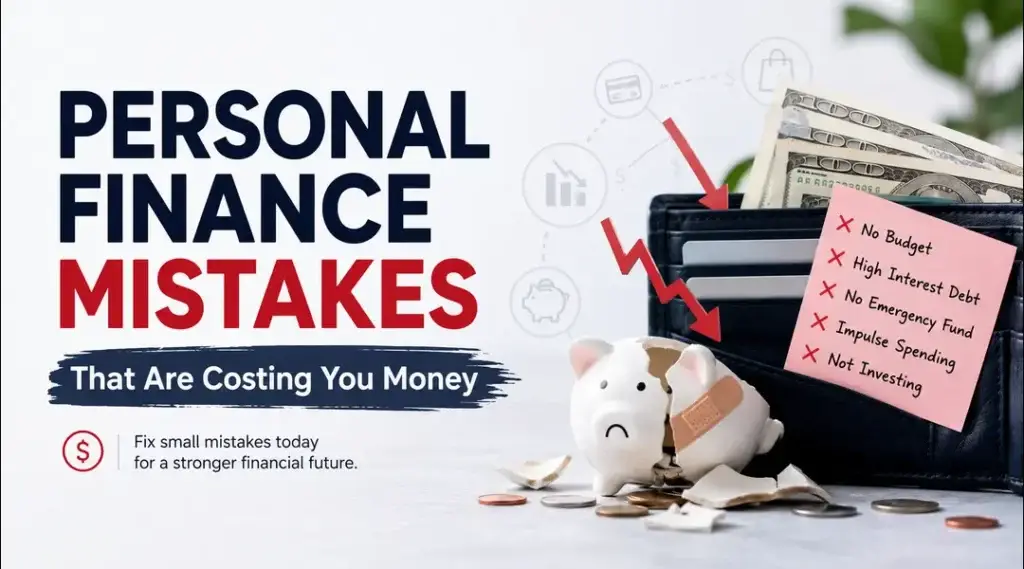
Managing money is a skill that impacts almost every area of life. Whether you want to build savings, reduce stress, buy a home, or prepare for retirement, your daily financial decisions matter. However, many people make common money mistakes without realizing how much they are affecting their financial future.
Some financial mistakes may seem small, but over time they can become expensive habits. Spending without a plan, ignoring savings, depending too much on debt, or missing investment opportunities can slow down your progress.
The good news is that most personal finance mistakes can be corrected with awareness and better planning. By understanding where you may be losing money, you can make smarter choices and create a stronger financial foundation.
This guide explains the most common personal finance mistakes and practical steps you can take to avoid them.
Not Having a Clear Budget Plan
One of the biggest personal finance mistakes people make is not creating a budget. Without a clear understanding of where your money goes, it becomes difficult to control spending and achieve financial goals.
A budget is not about restricting yourself from enjoying life. It is a simple tool that helps you decide where your money should go before you spend it.
Many people earn enough money but still struggle because they do not track expenses. Small purchases, subscriptions, dining expenses, and unnecessary shopping can quietly reduce your monthly savings.
How to Create a Simple Budget
Start by listing your monthly income and regular expenses. Divide your money into important categories such as:
- Housing and utilities
- Food and transportation
- Debt payments
- Savings and investments
- Entertainment and personal spending
Review your expenses regularly and adjust your budget when your financial situation changes.
A simple spending plan can help you identify unnecessary costs and give you more control over your money.
Ignoring Emergency Savings
Life is unpredictable. Unexpected expenses like medical bills, car repairs, or sudden job changes can create financial pressure if you do not have emergency savings.
Many people depend on credit cards or loans during emergencies because they do not have enough cash available. This can lead to additional interest payments and long term financial stress.
Building an emergency fund should be one of your first financial goals. Ideally, you should aim to save enough money to cover several months of essential expenses.
Tips to Build an Emergency Fund
- Start with a small monthly savings goal
- Keep emergency money in a separate savings account
- Automate transfers so saving happens consistently
- Avoid using emergency savings for regular spending
Even a small amount saved regularly can provide financial security when unexpected situations happen.
Spending More Than You Earn
Living beyond your income is one of the fastest ways to create financial problems. Using credit cards, loans, or borrowed money to maintain a lifestyle you cannot afford can damage your financial health.
Many people increase their spending when their income increases. This is called lifestyle inflation. Instead of saving extra income, they spend more on expensive items, memberships, and unnecessary upgrades.
The goal is not to avoid spending completely. The goal is to make sure your expenses match your financial situation.
Ways to Control Overspending
- Wait before making large purchases
- Compare prices before buying
- Separate needs from wants
- Set monthly spending limits
- Focus on long term financial goals
Small changes in spending habits can create significant savings over time.
Not Tracking Small Expenses
Small expenses often appear harmless, but they can add up quickly. A daily coffee, frequent online shopping, unused subscriptions, and regular food delivery can take a large portion of your income.
Many people focus only on major expenses and ignore smaller purchases. However, understanding your complete spending pattern is important for improving your finances.
Try the Expense Tracking Method
Track every expense for at least 30 days. You may discover spending habits you were not aware of.
You can use:
- A budgeting app
- A spreadsheet
- A simple notebook
- Your bank transaction history
The goal is not to judge your spending but to understand your financial behavior.
Delaying Retirement Planning
Many people believe retirement planning is something they can start later. This is a common mistake because time is one of the most powerful advantages when building wealth.
Starting early allows your money more time to grow through compound growth. Even small contributions can become valuable over many years.
You do not need to wait until you earn a high income to begin investing. Developing the habit of saving and investing early can make a significant difference.
Basic Retirement Planning Steps
- Set a retirement goal
- Learn about different investment options
- Contribute regularly
- Increase contributions when your income grows
A long term approach can help you prepare for financial independence.
Keeping All Money in a Regular Savings Account
Saving money is important, but keeping all your money in a basic savings account may limit your financial growth.
While savings accounts provide safety and easy access, inflation can reduce the purchasing power of your money over time.
A balanced financial plan usually includes different options based on your goals, risk level, and timeline.
Learning the basics through a Personal Finance Guide can help you understand saving, investing, and managing money decisions more effectively.
Before choosing any investment option, research carefully and understand the risks involved. Financial decisions should match your personal situation and goals.
Taking on Unnecessary Debt
Debt can be useful when managed properly, but unnecessary debt can become a major financial burden.
High interest debt, especially from credit cards, can reduce your ability to save and invest because a large portion of your income goes toward interest payments.
Many people only focus on monthly payments instead of understanding the total cost of borrowing money.
Better Ways to Manage Debt
- Pay high interest debt first
- Avoid borrowing for unnecessary purchases
- Make payments on time
- Create a debt repayment strategy
Reducing debt gives you more freedom to use your income for important financial goals.
Not Learning About Personal Finance
Financial education plays an important role in making better money decisions. Many people start managing money without learning basic concepts like budgeting, investing, taxes, and credit management.
A lack of financial knowledge can lead to poor decisions and missed opportunities.
You do not need to become a financial expert overnight. Start by learning one topic at a time and applying what you learn.
Reading trusted financial resources, comparing information, and understanding different options can improve your confidence with money.
Missing Opportunities to Increase Income
Saving money is important, but increasing your income can also improve your financial situation.
Many people only focus on reducing expenses and forget that earning more money creates additional opportunities.
Developing new skills, exploring career growth, starting a side project, or learning about additional income sources can support your financial goals.
For example, exploring Top Passive Income Ideas can help you understand different ways people create additional income streams over time. However, every opportunity should be researched carefully because no income method is completely risk free.
Not Protecting Your Financial Future
Financial planning is not only about saving and investing. Protecting yourself from unexpected financial challenges is also important.
Insurance, proper account management, and keeping important financial documents organized can help protect your progress.
Many people ignore financial protection until a problem happens. Planning ahead can reduce stress during difficult situations.
Important Financial Protection Steps
- Review your insurance coverage
- Protect personal financial information
- Keep important documents organized
- Update financial plans when your situation changes
A complete financial strategy includes both growing and protecting your money.
Comparing Your Financial Journey With Others
Everyone has different financial circumstances, goals, responsibilities, and opportunities. Comparing your money situation with someone else can lead to poor decisions.
Social media often shows only the positive side of people’s financial lives. Expensive purchases or luxury lifestyles do not always represent financial success.
Instead of comparing yourself with others, focus on improving your own financial habits.
Track your progress based on:
- Savings growth
- Debt reduction
- Better spending choices
- Financial knowledge
Small improvements made consistently can create meaningful results.
How to Avoid Personal Finance Mistakes
Avoiding financial mistakes requires awareness, discipline, and continuous learning. You do not need a perfect financial plan immediately. The important thing is to take consistent steps.
Start with simple actions:
- Create a realistic budget
- Build emergency savings
- Reduce unnecessary expenses
- Pay attention to debt
- Learn investment basics
- Set clear financial goals
Financial improvement is a journey. Small decisions made today can create better opportunities in the future.
Final Thoughts
Personal finance mistakes can quietly affect your savings, investments, and financial confidence. The earlier you identify these mistakes, the easier it becomes to improve your money habits.
A strong financial future comes from making informed decisions, managing expenses wisely, and staying consistent with your goals.
Remember that financial success is not about earning the most money. It is about using your money effectively, planning ahead, and making choices that support the life you want.
By avoiding common money mistakes and continuing to improve your financial knowledge, you can build a healthier relationship with money and move closer to long term financial stability.