Artificial intelligence has changed the way people work, learn, create, and solve problems. The launch of ChatGPT introduced millions of people to the power of conversational AI, making tasks like writing, research, coding, and brainstorming easier than ever. But the next major step in artificial intelligence is moving beyond simple conversations.
The future is about AI systems that can understand goals, make decisions, complete tasks, and work independently with minimal human guidance. These advanced systems are known as AI Agents.
AI Agents are becoming one of the most important developments in the technology world because they can transform how businesses operate and how individuals interact with digital tools. Instead of only responding to questions, AI Agents can plan actions, use different tools, analyze information, and complete complex workflows.
As artificial intelligence continues to evolve, AI Agents are expected to become a major part of the next generation of digital experiences.
What Are AI Agents?
AI Agents are intelligent software systems designed to perform tasks autonomously based on user instructions or specific goals. Unlike traditional AI chatbots that mainly provide answers, AI Agents can take multiple steps to achieve an objective.
For example, a normal chatbot may answer a question about travel destinations. An AI Agent can go further by comparing flights, suggesting hotels, creating an itinerary, and organizing travel details based on user preferences.
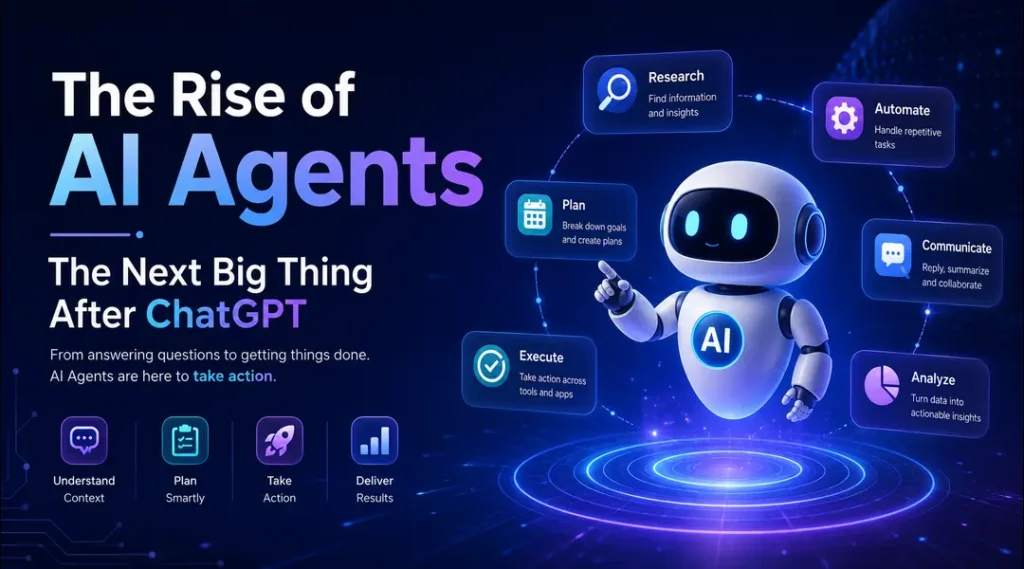
The main difference is that AI Agents are action oriented. They do not just provide information. They analyze situations, create plans, and execute tasks.
Some important abilities of AI Agents include:
Understanding User Goals
AI Agents can understand complex instructions instead of only responding to simple commands. They can identify what a user wants to achieve and decide the best way to complete the task.
Planning and Decision Making
AI Agents can break large tasks into smaller steps. They evaluate available information and decide what actions should be taken next.
Using Digital Tools
Modern AI Agents can connect with software applications, databases, websites, and other digital platforms to complete tasks efficiently.
Learning From Feedback
Many AI Agent systems can improve their performance by analyzing previous interactions and user feedback.
How Are AI Agents Different From ChatGPT?
ChatGPT introduced the world to conversational artificial intelligence. It can answer questions, generate content, explain concepts, and assist with many daily tasks.
However, traditional AI chat experiences are mostly reactive. Users ask questions, and the AI provides responses.
AI Agents represent a more proactive approach. They are designed to work toward a goal rather than only reply to a message.
For example:
A user asks ChatGPT to create a marketing plan. ChatGPT can provide ideas, strategies, and suggestions.
An AI Agent could potentially research competitors, analyze market trends, prepare a campaign plan, schedule tasks, and provide performance reports.
This shift from answering questions to completing tasks is what makes AI Agents a major technological advancement.
Why Are AI Agents Becoming Popular?
The growing demand for automation and smarter digital solutions is one of the biggest reasons behind the rise of AI Agents.
Businesses and individuals are looking for ways to save time, improve productivity, and reduce repetitive work. AI Agents can help by handling tasks that previously required significant human effort.
Some major reasons for their popularity include:
Increased Productivity
AI Agents can automate routine activities such as data analysis, scheduling, customer support, research, and content management. This allows people to focus on creative and strategic work.
Better Business Automation
Companies are adopting AI automation tools to improve efficiency. AI Agents can support different departments including marketing, sales, finance, customer service, and operations.
Faster Decision Making
AI Agents can process large amounts of information quickly. This helps organizations make informed decisions based on available data.
Personalized User Experiences
AI Agents can understand individual preferences and provide customized recommendations, making digital experiences more useful.
Real World Applications of AI Agents
AI Agents are not limited to one industry. They have the potential to change multiple sectors by improving efficiency and creating new possibilities.
Customer Support
Businesses can use AI Agents to handle customer questions, solve common problems, and provide personalized assistance at any time.
Unlike basic support bots, AI Agents can understand context and manage more complex conversations.
Healthcare Assistance
AI Agents can support healthcare professionals by organizing medical information, assisting with research, and improving administrative processes.
They are designed to support professionals rather than replace human expertise.
Marketing and Content Creation
Marketing teams can use AI Agents for audience research, content planning, campaign analysis, and customer engagement strategies.
The growth of AI technology has become a key part of the wider AI Revolution, changing how companies approach digital marketing and communication.
Software Development
Developers can use AI Agents to review code, identify errors, suggest improvements, and automate parts of the development process.
This helps software teams build products faster and more efficiently.
Personal Productivity
Individuals can use AI Agents as digital assistants for managing schedules, organizing information, planning tasks, and improving daily workflows.
Benefits of Using AI Agents
The adoption of AI Agents offers several advantages for businesses and individuals.
Saves Time
AI Agents can complete repetitive tasks faster than traditional methods, allowing users to spend more time on important activities.
Improves Efficiency
By automating workflows and reducing manual effort, AI Agents can improve overall productivity.
Handles Complex Tasks
AI Agents can manage multi step processes that require planning, analysis, and decision making.
Provides 24/7 Assistance
Unlike human teams that operate during specific hours, AI Agents can provide continuous support.
Challenges and Limitations of AI Agents
Although AI Agents offer many benefits, they also come with challenges that need careful consideration.
Accuracy Issues
AI systems can sometimes provide incorrect information or make mistakes. Human monitoring remains important for critical tasks.
Privacy Concerns
Since AI Agents may work with personal or business data, strong security practices are necessary to protect sensitive information.
Human Oversight
AI Agents should support human decision making rather than completely replace human judgment, especially in areas requiring expertise and responsibility.
Technical Complexity
Building and managing advanced AI Agent systems requires proper planning, infrastructure, and skilled professionals.
The Future of AI Agents
The development of AI Agents is expected to continue growing as artificial intelligence technology becomes more advanced.
In the future, AI Agents may become common digital partners that help people manage work, education, business operations, and personal tasks.
Companies are investing heavily in AI research to create systems that are more reliable, secure, and capable. As these technologies improve, AI Agents could become an essential part of everyday digital life.
The next phase of artificial intelligence is not only about creating smarter machines. It is about building systems that can collaborate with humans and help solve real world problems.
How Businesses Can Prepare for AI Agents
Businesses that want to benefit from AI Agents should focus on understanding where automation can create the most value.
Companies can start by:
Identifying Repetitive Tasks
Finding activities that consume time but do not require complex human creativity is a good starting point for automation.
Improving Data Management
AI Agents depend on quality information. Businesses should organize and protect their data before implementing advanced AI solutions.
Training Employees
Teams should learn how to work effectively with AI tools and understand their opportunities and limitations.
Maintaining Human Control
Successful AI adoption requires a balance between automation and human expertise.
Conclusion
AI Agents represent the next major stage of artificial intelligence after conversational tools like ChatGPT. They are changing the way technology interacts with people by moving from simple responses to independent task completion.
With the ability to plan, analyze, and perform actions, AI Agents have the potential to improve productivity across industries and create smarter digital experiences.
While challenges around accuracy, privacy, and responsible usage remain, the future of AI Agents looks promising. Businesses and individuals who understand this technology early can better prepare for the changing digital world.
The rise of AI Agents is not just another technology trend. It is a significant step toward a future where humans and intelligent systems work together more effectively.